
The Mystery of “Lake X”
Back in the mid-1980s and early 1990s, stories were circulating about some very big muskies being caught somewhere in Ontario, Canada. The fishermen catching them would only say they came from “Lake X.”
Back then, many big muskies were still being kept and skin-mounted, so the fishermen who knew about the lake were afraid it would be exploited if word got out. Only a handful of fishermen really knew where Lake X was.
I believe it was around 1992 when In-Fisherman magazine finally let the cat out of the bag: Lake X was Lac Seul. I think one reason they finally revealed it was because Lac Seul had gone to catch-and-release-only musky fishing.
As soon as my friend George and I heard that, we knew we had to go. So along with my friend George my wife Dianah and I we were off to Lac Seul.
Getting to Lac Seul
This wasn’t an easy place to get to.
From the boat landing to our cabin was about a 30-mile boat ride. We didn’t have GPS or modern graphs with detailed lake maps like we do nowadays. In fact, there wasn’t even a very good map showing the depths and hazards.
We had to meet someone from the outpost camp at the boat landing at 8:00 a.m. sharp and follow their boat to camp. Miss that boat and we’d have to find our own way using a map and compass.
That’s how we did things back then — a map in our lap and a good compass. The trick was knowing where you were on that map at all times.
Even following the camp boat was an adventure. Your boat had better be able to run at least 25 mph or you were going to be left behind. Once you knew the route, the trip took a little over an hour.
The camp itself was pretty basic. Our cabin had particle-board walls, a few single beds, a large picnic-style kitchen table, a sink, refrigerator, and running cold water, along with a pot belly wood stove if you needed heat. The outhouse was outside, and everyone used a community shower house. The camp had about 6 cabins.
We brought our own food, supplies and sleeping bags for the week. We even carried as much gasoline as possible in six-gallon cans because gas at the camp dock was expensive.
It was basically like going to a remote fly-in fishing camp — except we got there by boat.
“You Don’t Need a Guide”
When we arrived, we asked the guy running the camp about hiring a guide.
He kind of chuckled.
“You don’t need a guide. What do you want to catch — musky, northern pike or walleye?”
Musky, of course. That’s why we had come all that way.
He told us to fish rocky points, weedy bays and shorelines with green reeds. Where we saw green reeds, he said there would usually be good cabbage weeds growing out in front of them.
We also told him we’d like to catch a few walleyes for supper.
He pointed across the water and basically said, “See that point right over there? Fish right off that point.”
George and I looked at each other like, Seriously?
That first evening we went to the exact spot he’d pointed out and caught about four nice eater-size walleyes for supper that night.
We were off to a good start.
Our trip ran Saturday to Saturday, and we spent probably 99 percent of the week musky fishing. George caught two northern pike over 40 inches. We caught quite a few other nice pike and even some big walleyes that hit our musky lures.
But as Thursday rolled around, we still hadn’t caught a musky.
Thursday, July 29, 1993
Then it happened.
It was Thursday, July 29, at about 2:20 in the afternoon.
We were working our way down an island shoreline with beautiful green reeds along the bank. Just like the camp operator had told us, there was a great cabbage weed bed growing out in front of those reeds, from the shallows down to about eight feet.
Lac Seul has dark water, much like a flowage, and the outside weed line generally ended around eight feet before dropping into deeper water.
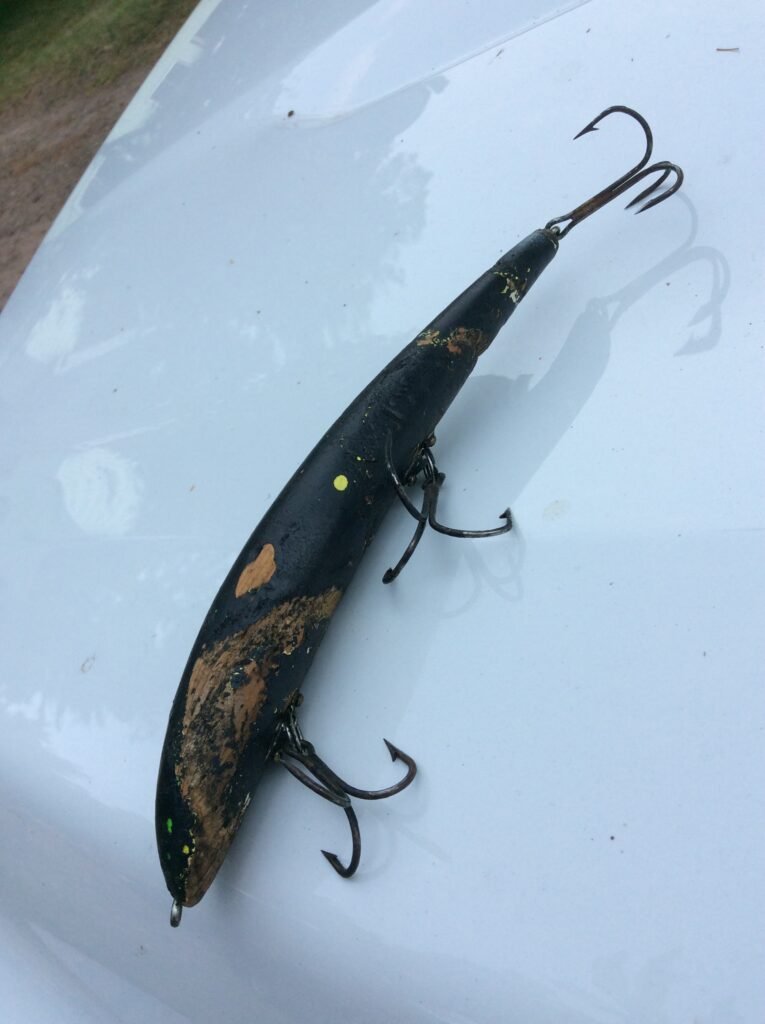
I was casting a 7½-inch black Banana Bait into the cabbage.
That lure worked beautifully through weeds. With short jerks, it would dive about two or three feet and dart from side to side. When I stopped, the buoyant lure would rise and actually back up. I could bang it into the cabbage, let it rise away from the weeds and rarely get hung up.
I was watching the lure as it approached the boat.
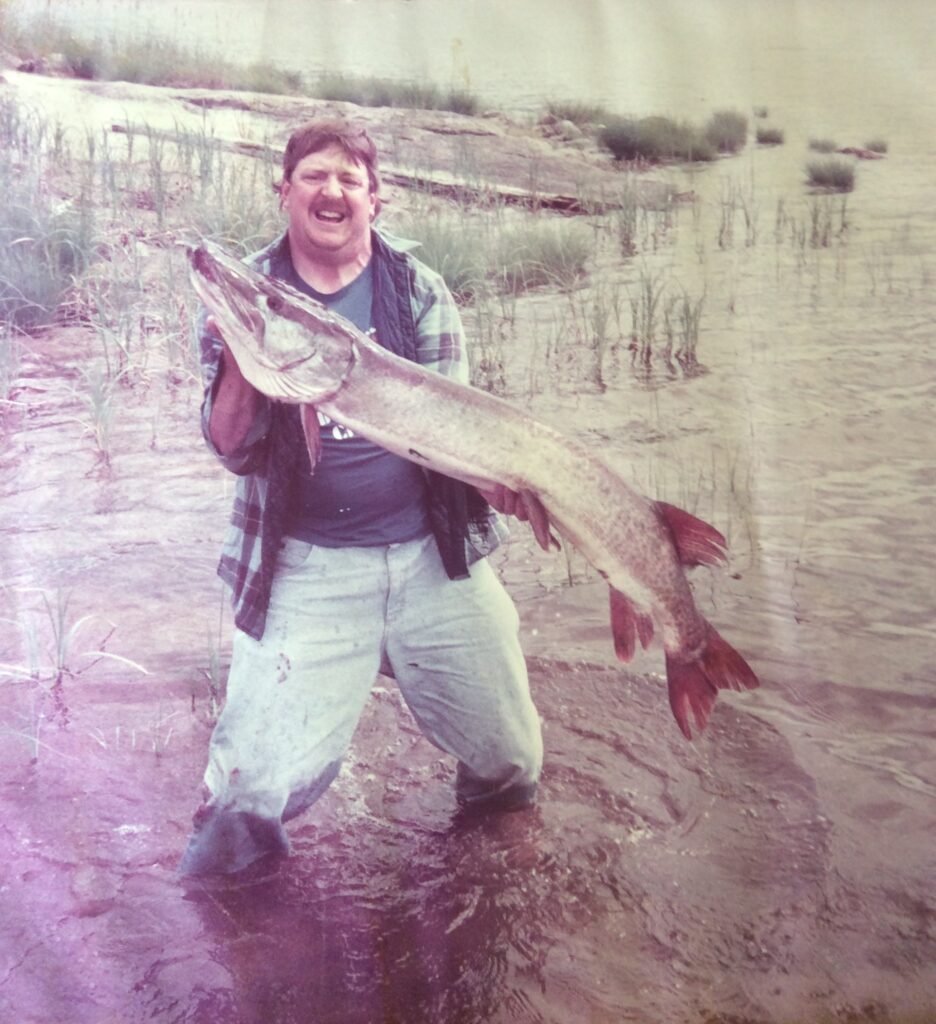
When it got about 10 feet away, this huge musky suddenly rose out of the weeds, charged the Banana Bait and smashed it.
I reared back, set the hook, and it was game on.
Heart-pounding chaos.
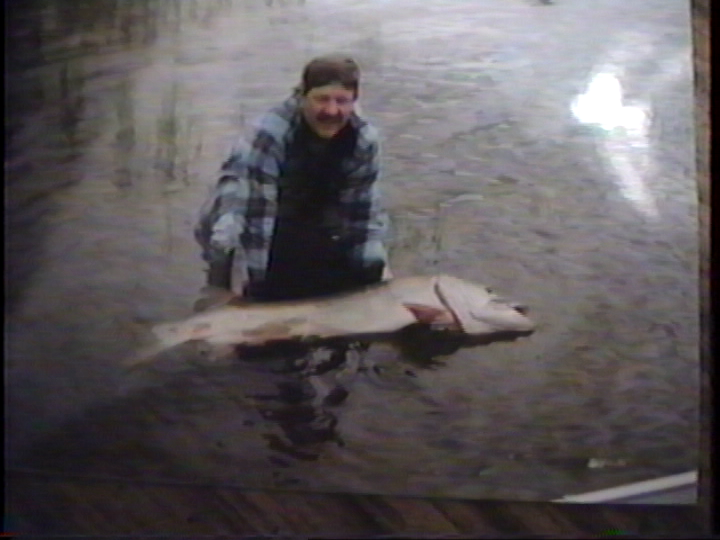
You can watch what happened next in the video.
A 53-Inch Musky
The fish measured 53 inches. Looking at the old video today, you can see that the fish was bent downward in the middle while we measured it, so it may actually have been a little longer.
I don’t remember anyone having the big bump boards we use today unless they had made one themselves.
There are also things I would do differently today.
We didn’t understand back then that vertically holding a big musky could harm the fish, and I would never recommend weighing a big musky the way we did. Fish handling and our understanding of musky conservation have come a long way since 1993.
Fortunately, the fish appeared to be in pretty good condition when it swam away.
It had a 19-inch girth, which was fairly skinny for a fish that long, and weighed 32 pounds. In my opinion, it may have been an old fish nearing the end of its natural lifespan.
But it went back into Lac Seul.
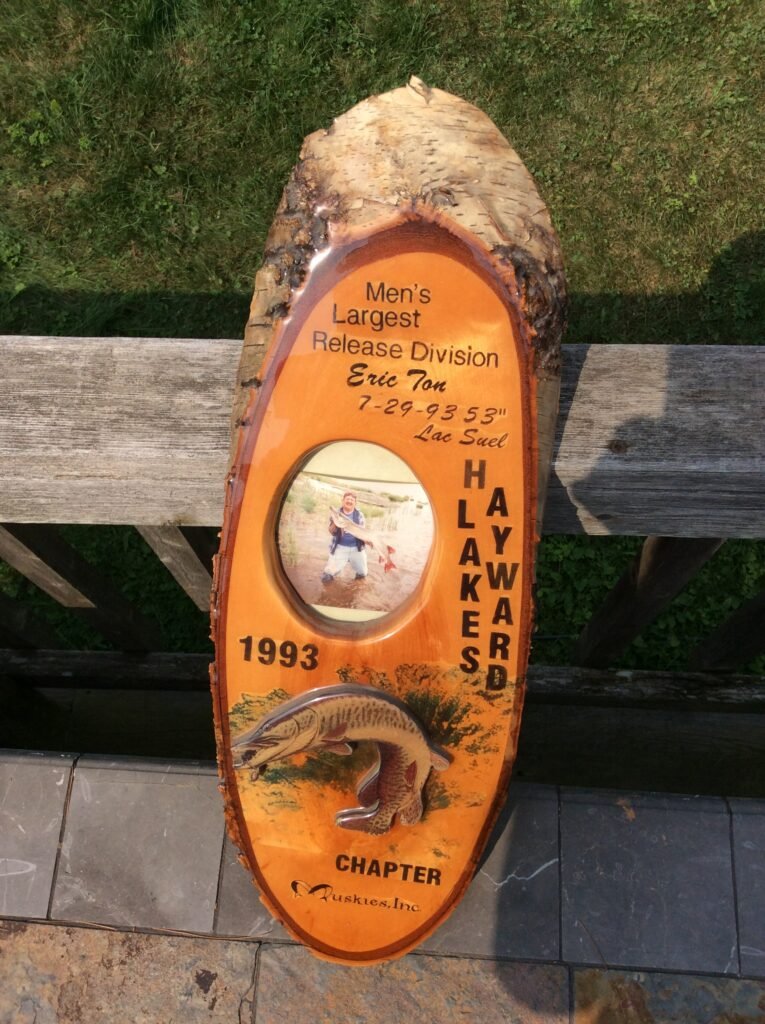
At the end of the 1993 season, the fish earned me the Hayward Lakes Chapter of Muskies Inc. award for Men’s Largest Release.
The Old-School Musky Tackle
Looking back more than 33 years later, I think the equipment is almost as interesting as the catch itself.
Here’s what I caught that 53-inch musky with:
- Lure: 7½-inch black Banana Bait
- Rod: Cabela’s Fish Eagle Graphite, 6’2”
- Reel: Abu Garcia 6500C
- Line: Cortland Musky Master 36-lb-test braided Dacron
- Leader: Homemade 100-lb-test single-strand stainless steel
The Banana Bait was made by well-known Hayward, Wisconsin musky guide Wayne Gutsch, whose main water was the Chippewa Flowage. Wayne passed away in 2011, and the original Banana Baits are no longer made.
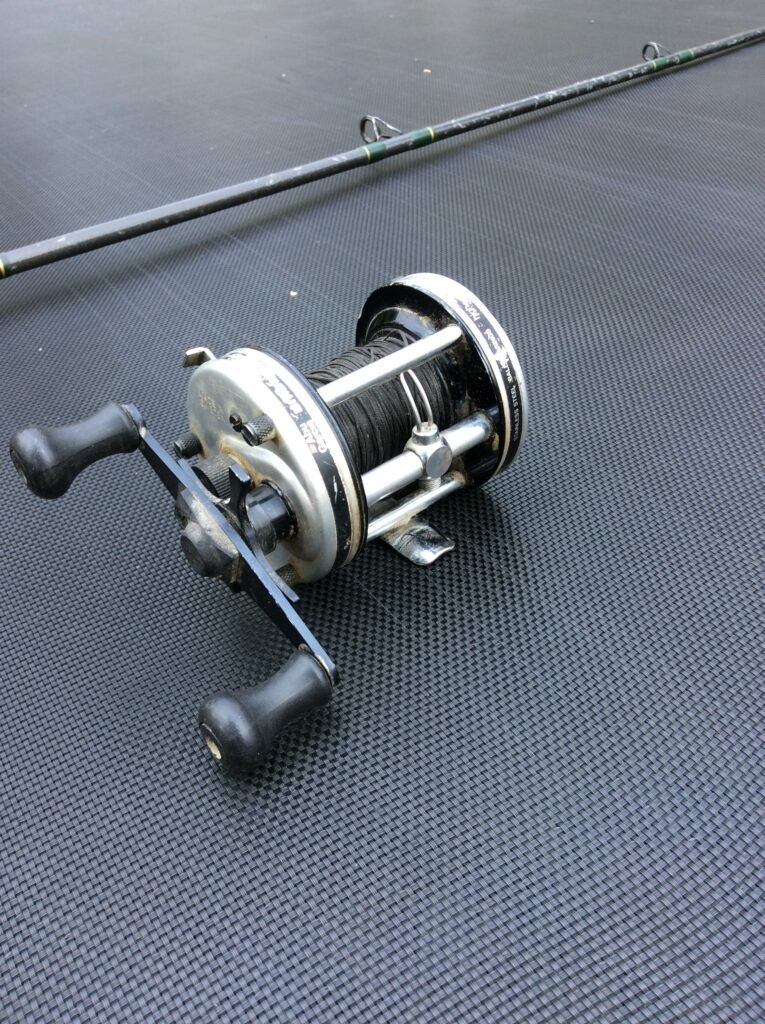
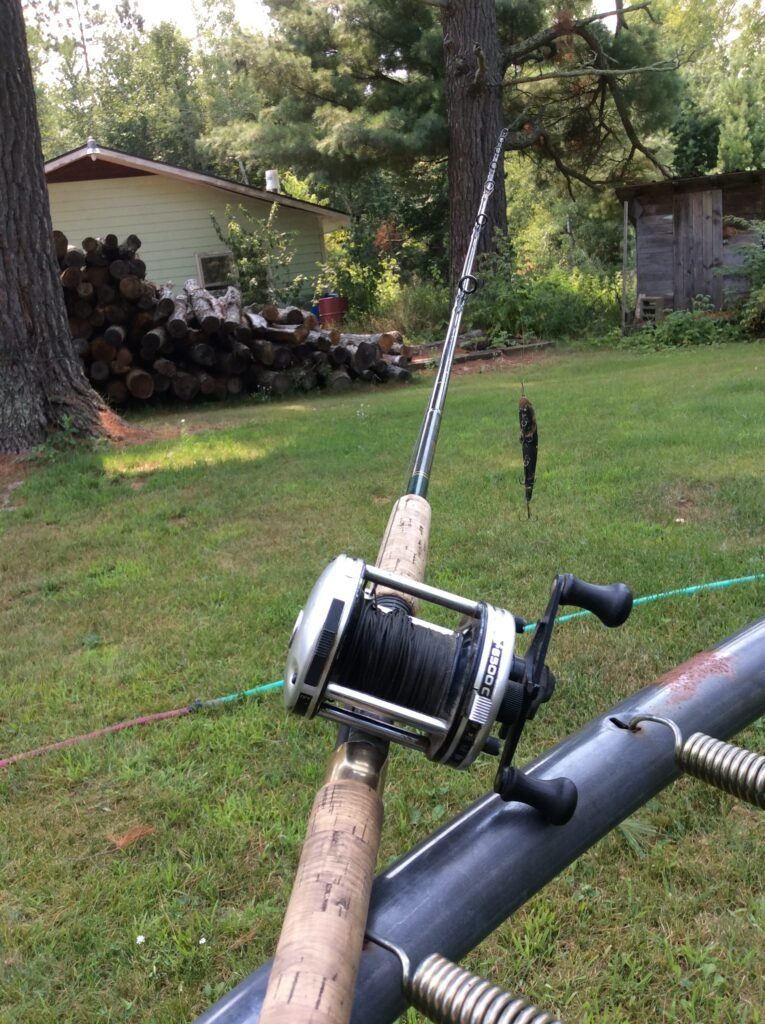
Fishing equipment, electronics and the way we handle muskies have changed tremendously since 1993.
But more than three decades later, I can still remember watching that black Banana Bait coming through the cabbage — and seeing that huge fish rise out of the weeds and smash it.
That’s a fishing memory I’ll never forget.
